
Introduction
In beverage production—whether you’re filling carbonated drinks, juices, teas, or beer—the tunnel pasteurizer is one of the most important machines on the line. It ensures product safety, stabilizes microbiological quality, and protects flavor without affecting carbonation or nutritional value.
Many manufacturers understand that “a tunnel pasteurizer heats bottled drinks,” but few truly know how it works or what details affect performance. In reality, pasteurization is simple in theory but difficult to execute perfectly. Temperature control, spray uniformity, conveyor speed, and bottle type all influence the final result.
This guide explains how a tunnel pasteurizer works step-by-step, the technology behind it, and real insights from 20 years of industry experience—so you can choose, operate, or troubleshoot your pasteurizer with confidence.
What Is a Tunnel Pasteurizer?
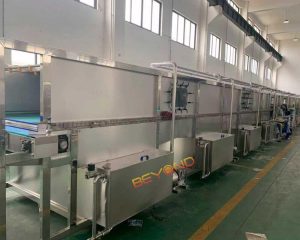
A tunnel pasteurizer is a continuous thermal processing machine used for filled and sealed containers such as glass bottles, PET bottles, and cans. Instead of heating batches at a time, the system processes products continuously, making it ideal for medium to large beverage facilities.
Main Components
-
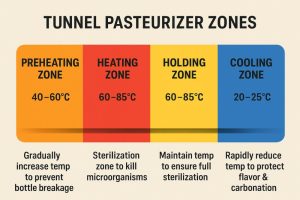
Preheating Zone – Gently raises the bottle temperature to avoid thermal shock.
-
Heating Zone – Brings the product up to pasteurization temperature.
-
Holding Zone – Maintains the required temperature long enough for microbial inactivation.
-
Cooling Zone – Gradually cools bottles to protect flavor and carbonation.
-
Conveyor System – Moves containers through each thermal zone at a controlled pace.
-
PLC Control System – Monitors temperatures, spray density, conveyor speed, and alarms.
Industry Insight
From real factory experience, temperature stability alone doesn’t guarantee effective pasteurization.
Spray coverage and spray density are equally important—poor nozzle performance is one of the most common causes of under-pasteurization.


How Pasteurization Works
Pasteurization uses controlled temperature × time to reduce harmful microorganisms to safe levels.
The standard unit of measurement is the Pasteurization Unit (PU):
1 PU = holding the product for 1 minute at 60°C
Different beverages require different PU levels:
-
Soft drinks: 60–70°C for 10–20 minutes
-
Fruit juices: 65–80°C for 15–25 minutes
-
Beer: 75–85°C for 20–30 minutes
Pasteurization is not sterilization—it reduces bacteria, yeast, and enzymes while preserving flavor, aroma, and carbonation.
Why Proper Heating Matters
Both the product and the container must heat evenly.
Too fast → cracked bottles, PET deformation
Too slow → insufficient PU, spoilage risk
This is why tunnel pasteurizers use multiple temperature zones instead of a single heating stage.
How a Tunnel Pasteurizer Works: Step-by-Step
1. Preheating Zone
The process begins with warm water (typically 40–60°C) sprayed onto bottles.
Purpose:
-
Avoids glass bottle breakage
-
Prevents PET deformation
-
Reduces temperature shock between product and heating zone
Expert Note:
In summer, incoming bottle temperature is often higher. Preheat zones must be adjusted downward or the product may exceed PU targets early.
2. Heating Zone
This is where the product reaches the target pasteurization temperature.
Two common heating methods:
-
Hot water spray (most stable and widely used)
-
Steam heating (lower water usage, but requires more control skill)
Critical factors:
-
Spray nozzle density
-
Spray angle
-
Circle coverage of each bottle
-
Even distribution across the conveyor
Industry Insight:
Spray-nozzle clogging is one of the biggest reasons for pasteurization failure. Regular maintenance is essential.
3. Holding Zone
Once the product reaches the required temperature, it moves through a holding section long enough to accumulate the needed PU.
Conveyor speed determines how long each bottle stays in this zone.
Premium machines automatically adjust conveyor speed to maintain the proper PU—even if product temperature fluctuates.
4. Cooling Zone
Cooling is done gradually, from warm water to cold water (down to ~20–25°C).
Why gradual cooling?
-
Prevents PET collapse
-
Avoids pressure shocks in carbonated drinks
-
Protects beer from over-pasteurization (which can cause bitterness and oxidation)
5. PLC Control System
The PLC is the “brain” of the pasteurizer. It manages:
-
Water temperature in each zone
-
Spray pump operation
-
Conveyor speed
-
Alarms for temperature deviation
-
Water recirculation and energy recovery
Modern systems can calculate PU in real time to ensure consistency.
Types of Tunnel Pasteurizers
1. Hot Water Tunnel Pasteurizer
-
Most common
-
Extremely stable temperature control
-
Suitable for PET, glass, and cans
2. Steam Tunnel Pasteurizer
-
Lower water consumption
-
Good for products sensitive to water contact
-
Requires higher technical expertise
3. Hybrid Tunnel Pasteurizer
-
Combines steam + hot water
-
Faster heat-up
-
Better energy efficiency
-
Ideal for beer or high-PU applications
Benefits of Using a Tunnel Pasteurizer
-
Improved product safety — reduces harmful microorganisms
-
Longer shelf life — especially for sugary or low-acid beverages
-
Protects flavor & carbonation through controlled heating
-
High production efficiency — ideal for continuous bottling lines
-
Accurate, automated control using PLC & sensors
-
Compatible with multiple bottle types
-
Energy-efficient designs with heat recovery & water recycling
Industry Note
When installing a tunnel pasteurizer, always consider flooring load, drainage capacity, and water quality—these hidden factors often affect long-term stability more than the pasteurizer itself.
Conclusion
A tunnel pasteurizer may seem straightforward on the surface, but consistent, reliable pasteurization requires precise control of temperature, spray coverage, conveyor speed, and PU accumulation. Understanding how the machine works—and how each zone affects product quality—helps beverage manufacturers select the right model, optimize operations, and avoid common issues like bottle breakage, uneven heating, or over-pasteurization.
Whether you’re designing a new plant, upgrading existing equipment, or troubleshooting pasteurization problems, the knowledge in this guide will help you make better decisions and improve the stability of your beverage production line.

