
When we first planned plastic cans for wine and juice in Maharashtra, the first pack that landed on the table was a beer canner.
Our production manager did not wait for the meeting to finish:
“That machine is for beer. We are not filling beer. Why is it in the pack?”
Fair question. Beer wants cold, counter-pressure fill so the gas stays in the drink. Still wine and still juice in a thin plastic can do not. If a supplier already sent you a beer canning machine for this job, that is the wrong conversation. Those aluminum / beer blocks live on the can filling machine page. What we needed was a plastic can filling machine: gravity fill, a shot of liquid nitrogen, then a double seam.
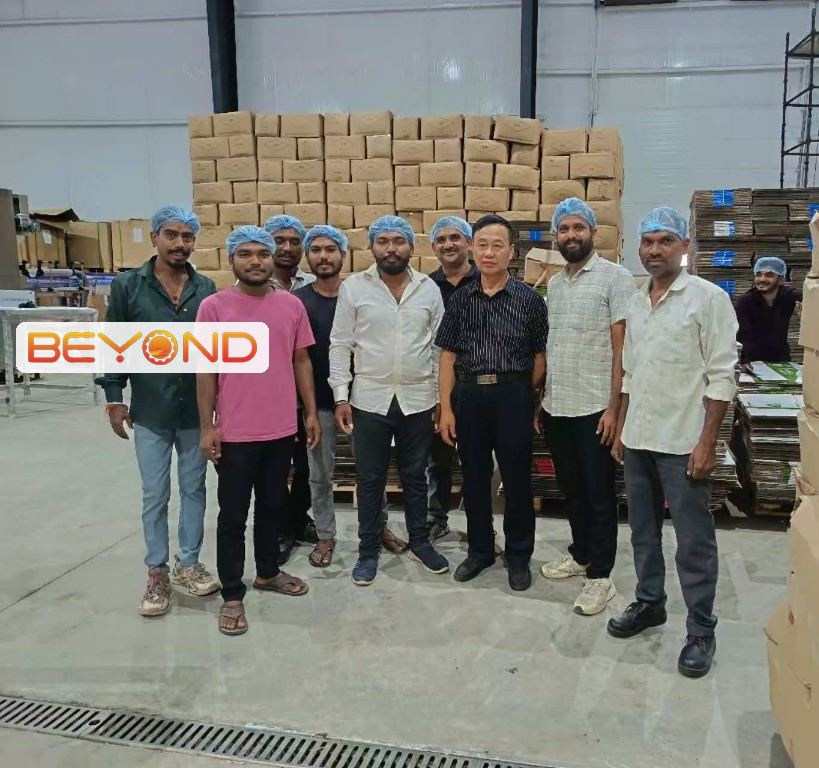
This is us on the floor in Maharashtra—not a catalog visit. The Beyond people stayed until the line actually ran.
The question that decided the filler
We stood at the seamer with a sample can and asked the thing that actually scared us:
“If we skip the nitrogen, will this can look tired after a week in the warehouse?”
Yes. The wall is plastic. Beer has bubbles to hold the can round. Wine and juice do not, so nitrogen goes in after the fill and before the seam. That is the same path as the plastic can filling machine page—we just wanted to hear it next to our own can, not on a PDF.
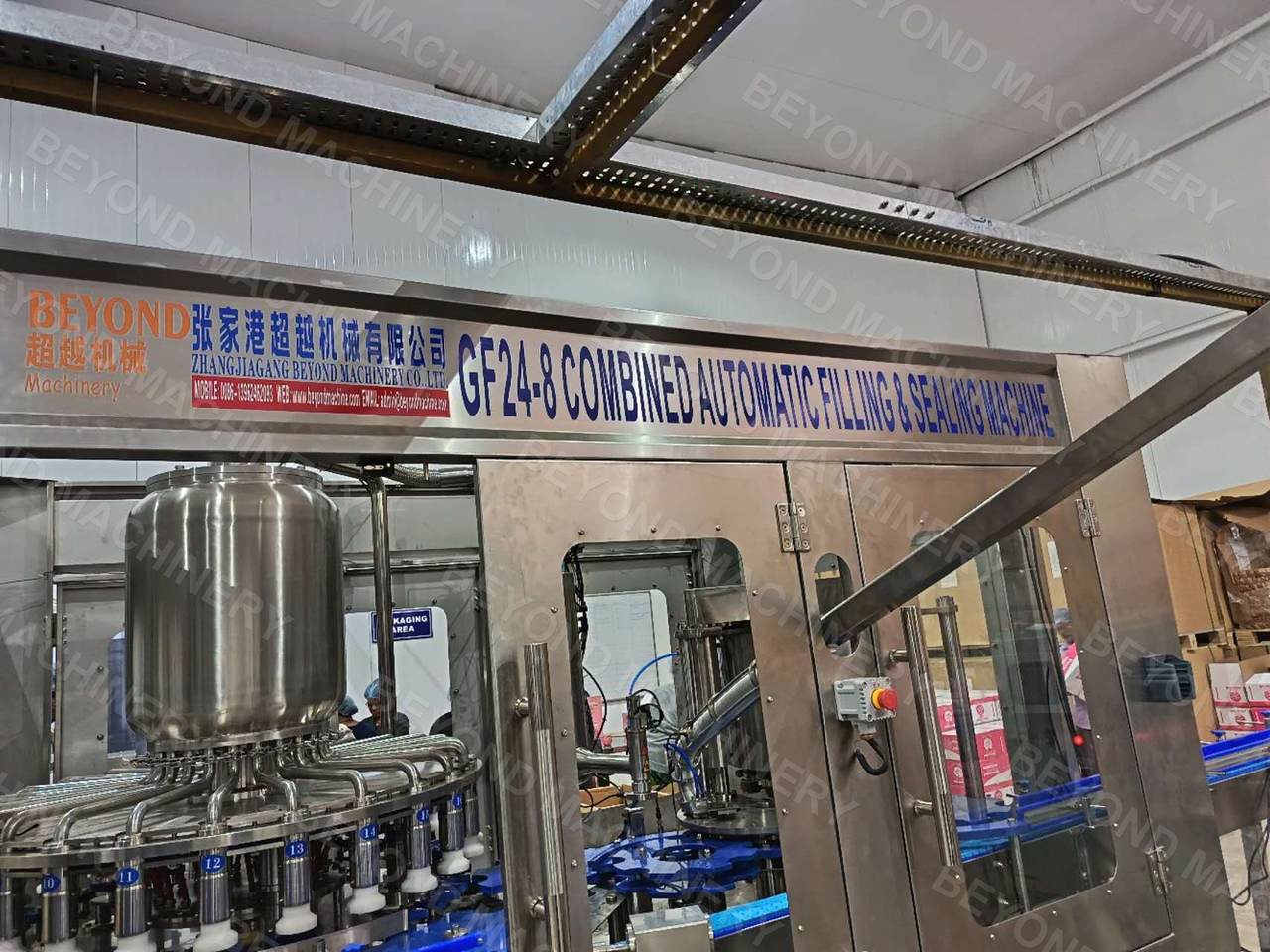
The GF24-8 on our floor. This is the machine, not a render.
How the filling actually runs
Empty cans get an air rinse. Then the GF24-8: 24 fill valves, 8 seaming heads, nitrogen before the seam. Sleeve and steam shrink after. Date code on the way to packing. About 150 cans per minute on this class—catalog speed is a starting point. We still had to put a number against our can drawing.
If what you actually have is PET or glass bottles, start on juice filling machines. Send the package first. They will tell you which door to walk through. We sent the can drawing. That saved two weeks of arguing about the wrong line.
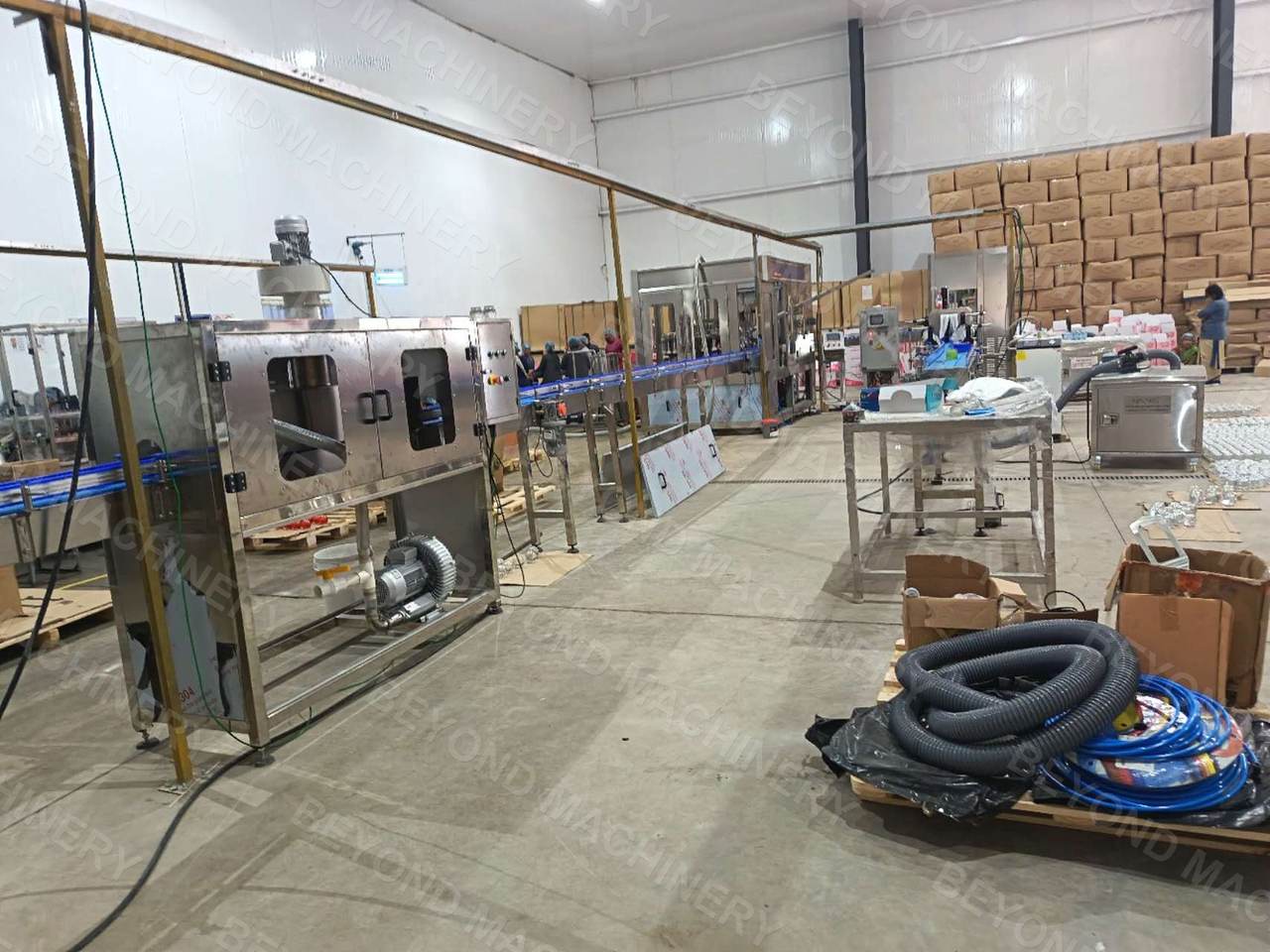
Rinse first. Dust in an empty plastic can is a filling argument you do not want later.
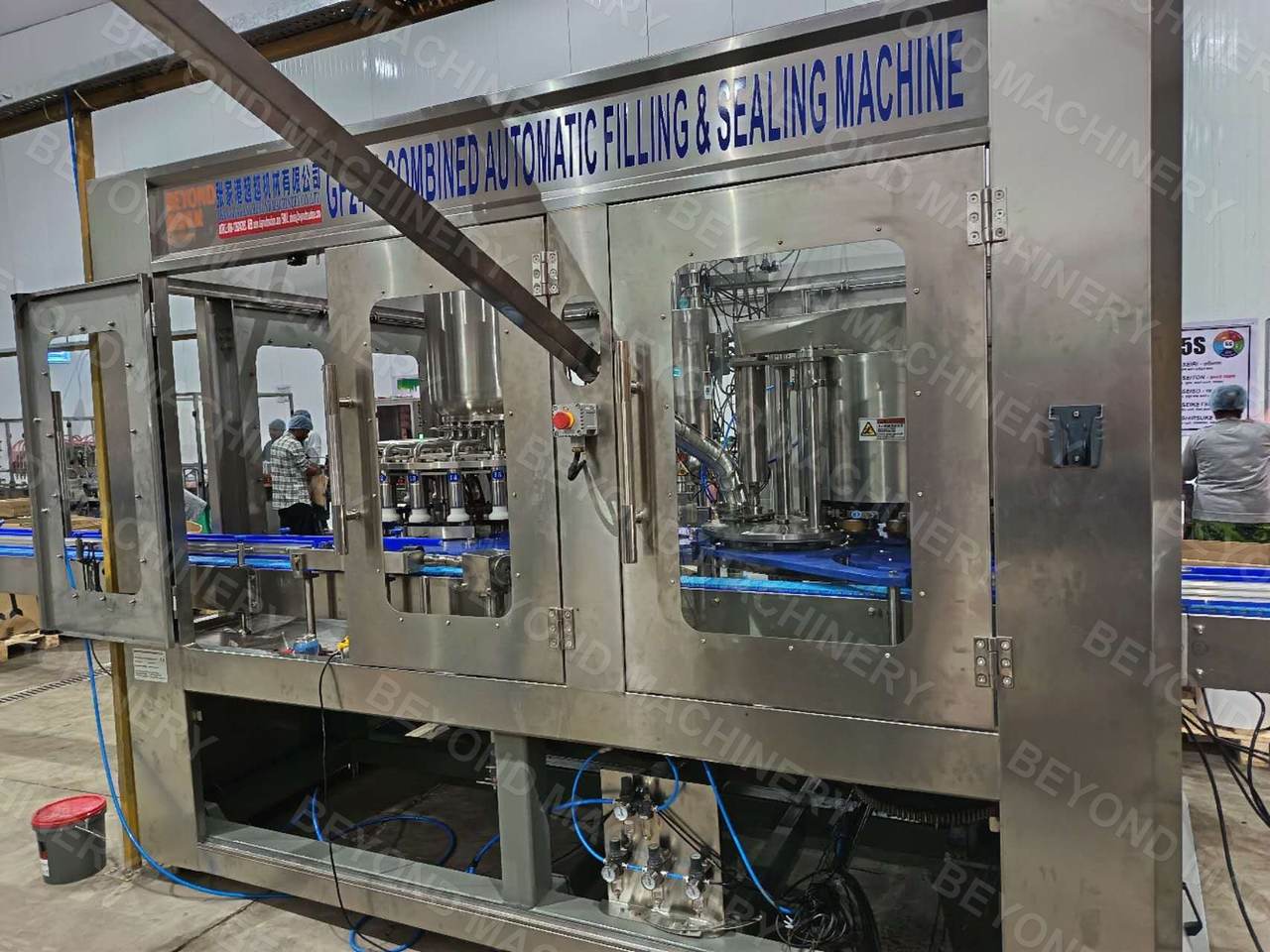
Left window is fill. Right window is the seamer. Same frame, so the two stay in time.
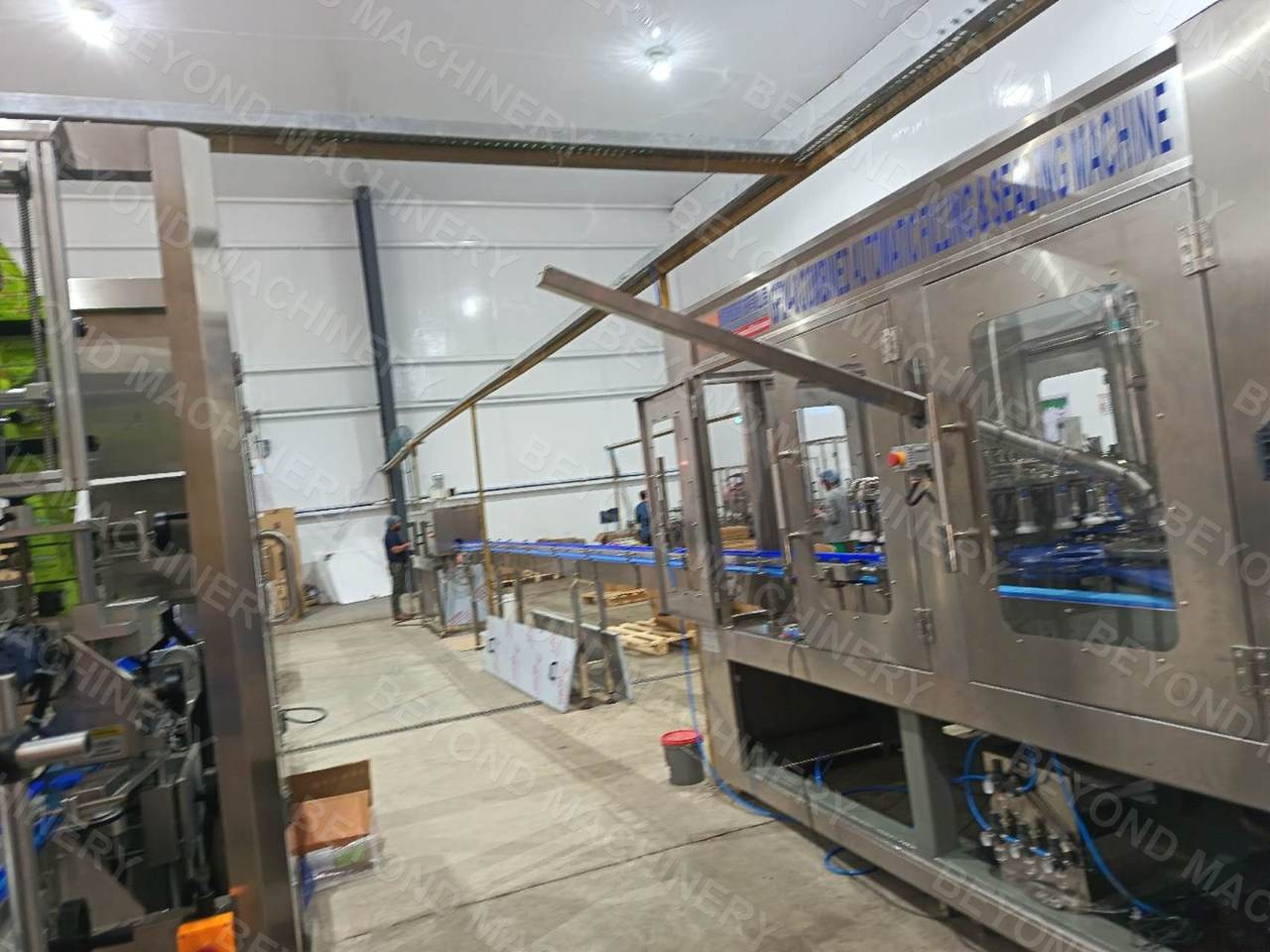
Looking down our hall: filler-seamer, then the rest of the chain.
Why we have a sleeve machine at all
Printed aluminum shells often skip a labeler. These plastic cans do not. After the seamer the line goes into the applicator, the steam tunnel, then the coder. Our brand team asked:
“Can we print the shell and kill the sleeve?”
That is a packaging call, not a filler call. We kept the sleeve. If you are still deciding, walk it against labeling machines and say which way the brand team is leaning.
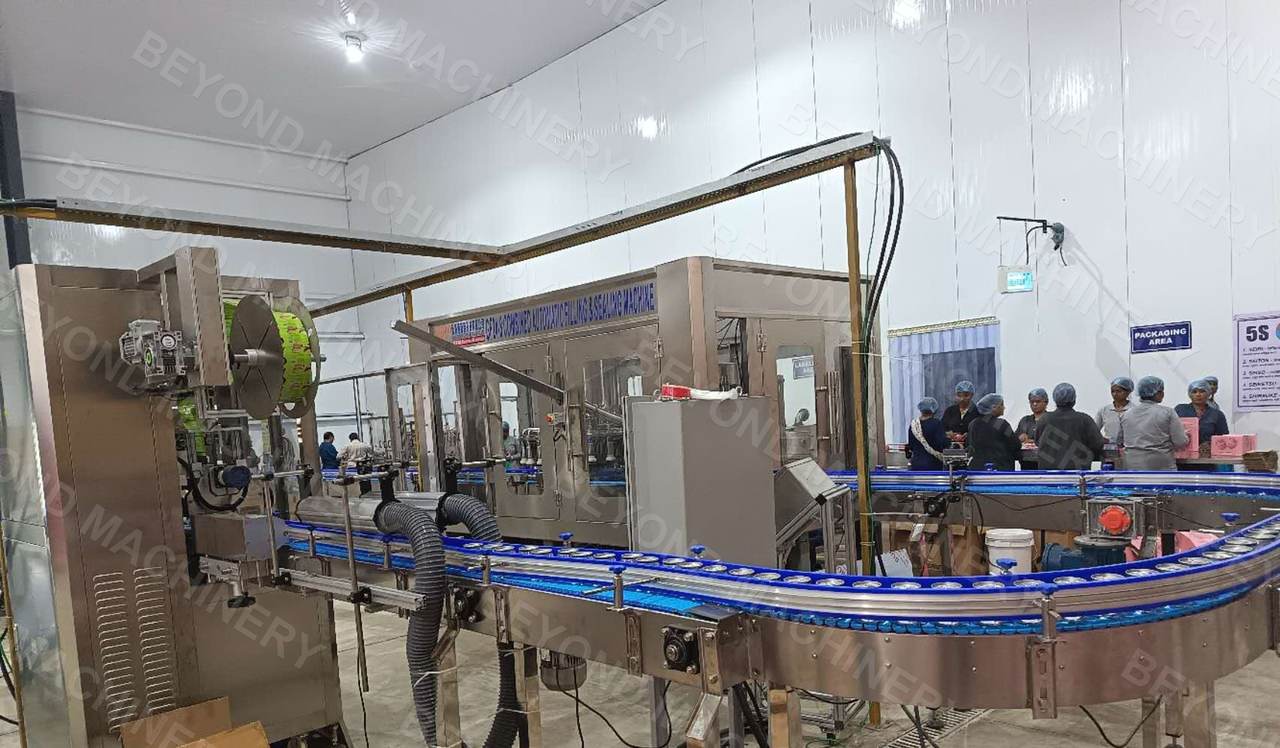
Sleeve on the curve after fill and seam. Cans are already closed here.
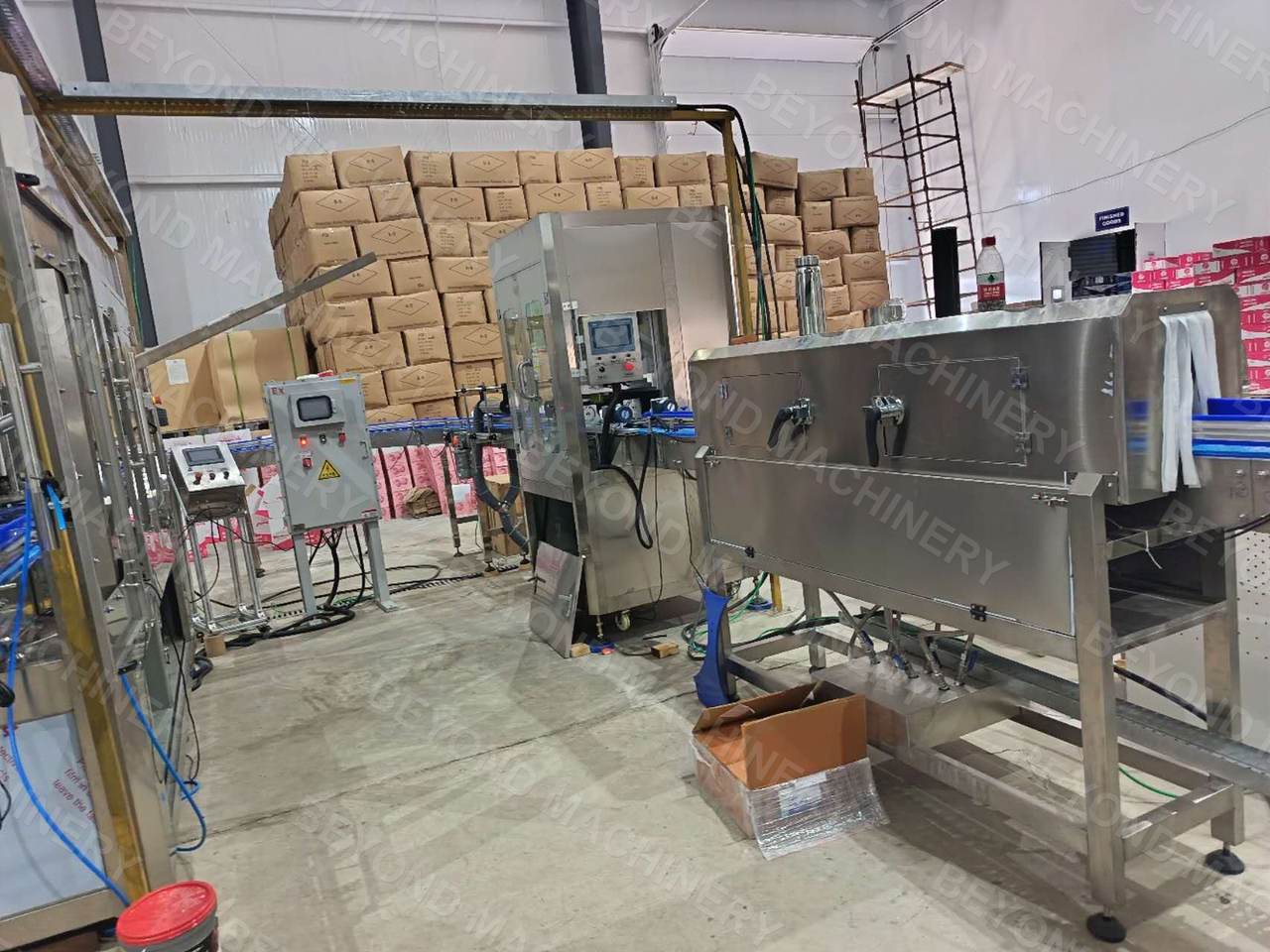
Steam shrink and the date coder—the last two stations before packing.
What we asked on commissioning day
Can we run wine in the morning and juice after lunch?
We asked that standing at the CIP skid. Answer: yes, if both are still. Tell them both recipes before they freeze the cleaning. Switching drinks is a cleaning conversation, not a second filler.
Is 150 CPM a promise?
It is the GF24-8 class. Foam, temperature, and your end type change the real number. They sized it on our can, then we ran it together at commissioning. That is the only number we trust now.
What should you send before you quote?
Can manufacturer drawing, fill volume, wine or juice (or both), and a target speed. Please do not attach a beer seamer spec and ask anyone to “make it work on plastic.” We already made that mistake once, on paper. The hall photo above is what it looks like when you send the right drawing.
Related: Can filling machines · Plastic can filling machine · Juice filling machines · Labeling machines · Commissioning notes from the same hall

